Spring, Softly: Three Japanese-Inspired Recipes for March
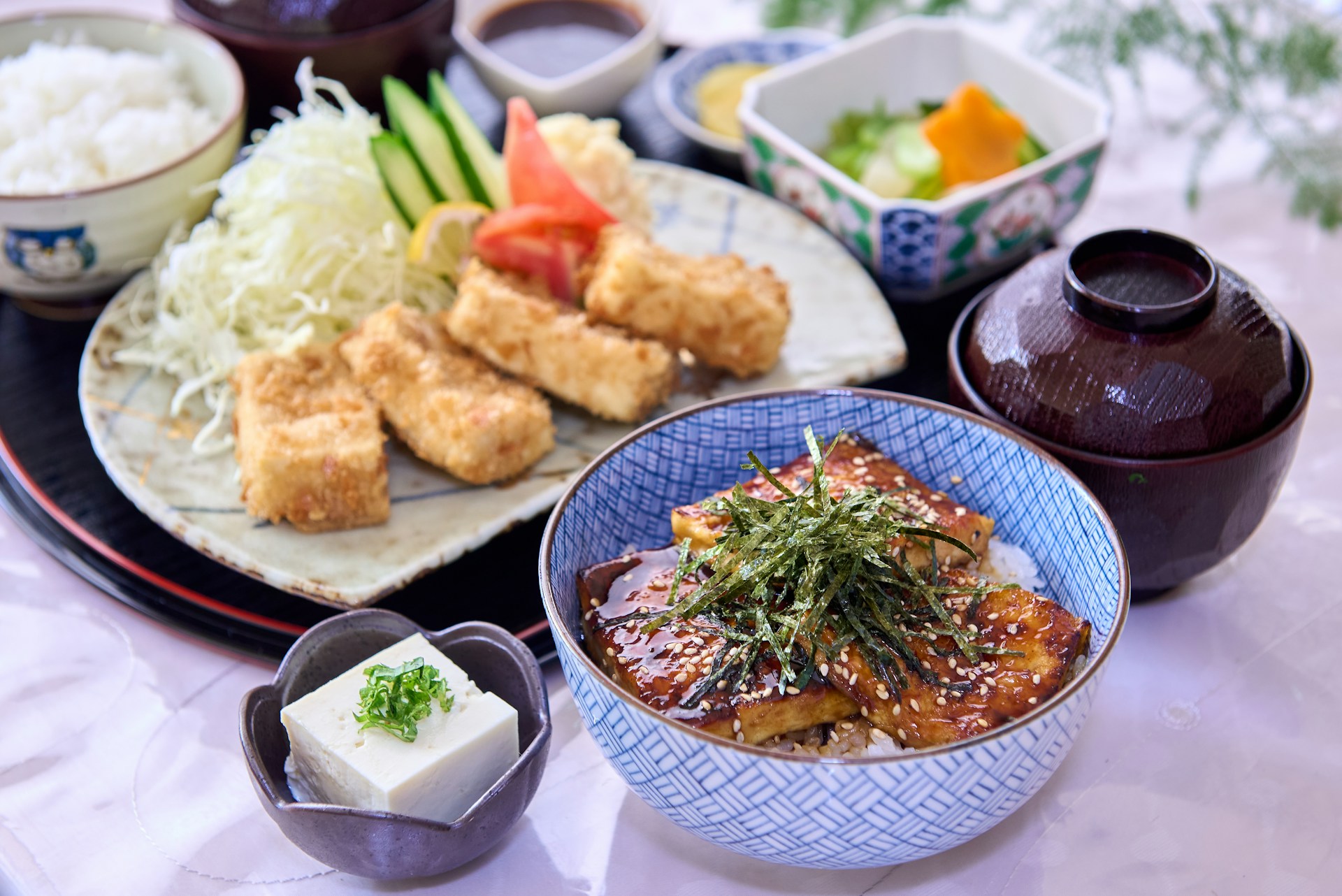
March arrives quietly. The light lingers a little longer, the air softens, and what we crave begins to shift. Lighter broths. Greens just beginning to return. Rice bowls that feel grounding but not heavy. This small collection of Japanese-inspired spring recipes is my way of welcoming the season gently — with balance, warmth, and intention.
I’m inspired by the principles of the traditional Japanese way of eating – Washoku – which feels especially aligned with this moment. Seasonal vegetables. Broth. Rice. Fermented foods. Small dishes arranged with care. All of these recipes utilize the magical umami of miso. Here is my favorite white miso, made in Kyoto – you have to try it!
Simple soup
A simple bowl, layered quietly.
Earthy shiitake.
Peppery radish.
Soft cabbage.
Fresh ginger warming the broth.
It’s the kind of soup that steadies you.
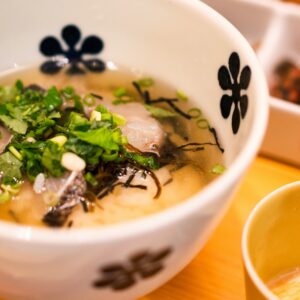
Miso Soup with Shiitake, Radish, Cabbage & Ginger
Ingredients
For the broth:
- 4 cups water
- 1 piece kombu (about 2 Inches)
- 4 dried shitake mushrooms
For the soup:
- 3 tbsp white or yellow miso
- ½ cup thinly sliced shiitake (fresh or rehydrated)
- ½ cup thinly sliced radish
- 1 cup finely shredded green cabbage
- 1 teaspoon freshly grated ginger
- 1 teaspoon sesame oil
To finish:
- toasted sesame seeds
- thinly sliced green onion
Optional soy-marinated egg
- 2 eggs
- 2 tablespoons soy sauce or tamari
- 1 tbsp rice vinegar
- 1 tbsp water
Instructions
Prepare the broth:
- Place water, kombu, and dried shiitake in a pot.Let soak 20–30 minutes (if you have time).Gently heat until just before boiling.Remove kombu.This becomes your light dashi.
Cook the vegetables:
- Add sliced shiitake, radish, and cabbage to the broth.Simmer gently 5–7 minutes until tender but still vibrant.Add grated ginger in the last minute.
Add the miso:
- Turn off the heat.In a small bowl, whisk miso with a ladle of hot broth until smooth.Return this mixture to the pot.Do not boil after adding miso — it preserves its flavor and beneficial cultures.Stir in sesame oil.
Optional soy-marinated egg
- Bring a small pot of water to boil.Lower eggs in gently and cook 6½–7 minutes for jammy centers.Transfer to cold water, peel.Whisk soy sauce, rice vinegar, and water.Marinate eggs at least 30 minutes (or up to overnight).Slice before serving.
To Serve:
- Ladle soup into bowls.Top with halved soy egg (if using).Finish with sesame seeds and scallions.Serve immediately.
Notes
Plant-forward
Early spring asks for brightness. Crispness. A little lift.
Inspired by the traditional Japanese dish shira-ae, where vegetables are folded into a sesame-tofu dressing, this version leans lighter and greener. It’s fresh, quietly elegant, and exactly the kind of plate that feels right when the season begins to soften.
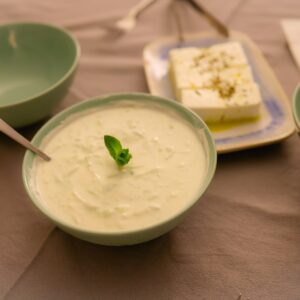
Spring Vegetables with Whipped Miso Tofu
Ingredients
For the vegetables:
- 1 cup snap peas, trimmed
- 1 large carrot, julienned or shaved into ribbons
- handful of blanched asparagus tips optional but recommended
For the tofu dressing:
- 7 oz firm tofu, drained
- 1-2 tbsp white miso to taste 💗
- 2 tbsp tahini
- 1-2 tsp fresh lemon juice to taste
- 1 tsp rice vinegar
- 1 tsp maple syrup optional
- pinch sea salt
- pinch of dashi granules or seasoning see link below*
To finish:
- Toasted sesame seeds
- Freshly cracked black pepper
Instructions
Prepare the Tofu Base
- Wrap tofu in a clean towel and gently press 10-15 minutes to remove excess moisture.Blend tofu, miso, tahini, lemon juice, rice vinegar, and a pinch of salt until smooth and airy. Taste-it should feel creamy, lightly tangy, not heavy. If needed, add a little water (or mirin for sweetness) to get the smoothness.Chill while preparing vegetables.
Blanch the vegetables
- Bring a pot of salted water to boil.Blanch snap peas 1-2 minutes until bright green and crisp-tender. Transfer immediately to ice water. Drain.If using asparagus, blanch briefly as well.Leave carrots raw for freshness, or blanch 30 seconds for a softer texture.
Assemble
- Gently fold vegetables into the whipped tofu dressing. Do not overdress – it should lightly coat, not smother.Finish with sesame seeds and black pepper.Serve slightly chilled or at cool room temperature.
Notes
serves 2-3 as a side Calories: 140-165 Protein: 7-8 g Carbs: 12-14 g Fiber: 3-4 g Fat: 8-9 g Beauty notes🌸
- Tofu for plant protein + calcium for skin and bone support
- Miso for fermented compounds for gut balance
- Snap peas & carrots for vitamin C and beta-carotene for collagen
- Sesame contributes trace minerals & healthy fats
Spring Salmon
Salmon delivers omega-3 fatty acids that support skin elasticity and luminosity, helping to calm inflammation from within. Some say, it’s a face lift on a plate.
Miso, a fermented staple, contributes beneficial compounds that encourage gut balance – as we know, radiant skin often begins in the microbiome.
Mineral rich greens and whole grain rice provide steady energy and antioxidants that protect and restore.
It’s the kind of meal that supports the slow, visible glow that comes from eating in rhythm with the season.
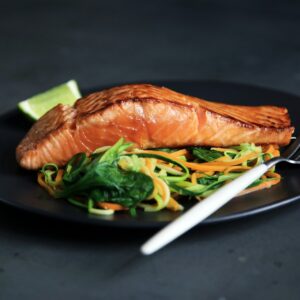
Spring Miso Salmon with Greens & Rice
Ingredients
- 2 wild salmon filets
- 1 tbsp white miso
- 1 tsp tamari or soy sauce
- 1 tsp grated fresh ginger
- 1 tsp rice vinegar
- 1 tsp sesame oil
For the plate:
- 1 cup cooked haiga rice or short-grain brown rice
- 1 cup lightly sauteed spring greens spinach, bok choy, baby kale or asparagus
- 1 tsp toasted sesame seeds
- thinly sliced scallions
- quick cucumber ribbons dressed with rice vinegar optional
Instructions
Marinate the Salmon
Whisk miso, tamari, ginger, rice vinegar, and sesame oil.Spread lightly over salmon.Let sit 15–20 minutes (no longer — miso is salty).Roast
Preheat oven to 400°F.Roast salmon 8–10 minutes, until just opaque and tender.Prepare the Greens
While salmon cooks, sauté greens in a small amount of olive or sesame oil until just wilted. Finish with a pinch of sea salt.Assemble
Spoon rice into shallow bowls. Top with greens. Place salmon gently over the top. Finish with sesame seeds and scallions.For even more brightness add shaved radishes and/or a squeeze of lemon.
Notes
These dishes are simple, but they carry a quiet structure – broth, grain, vegetables, fermentation – each element supporting the next. It’s a way of eating that feels composed rather than restrictive, seasonal rather than performative. In my next post, I explore the philosophy behind this rhythm – and why the Japanese approach to food continues to inspire conversations around longevity, balance, and natural beauty.
✨À bientôt!